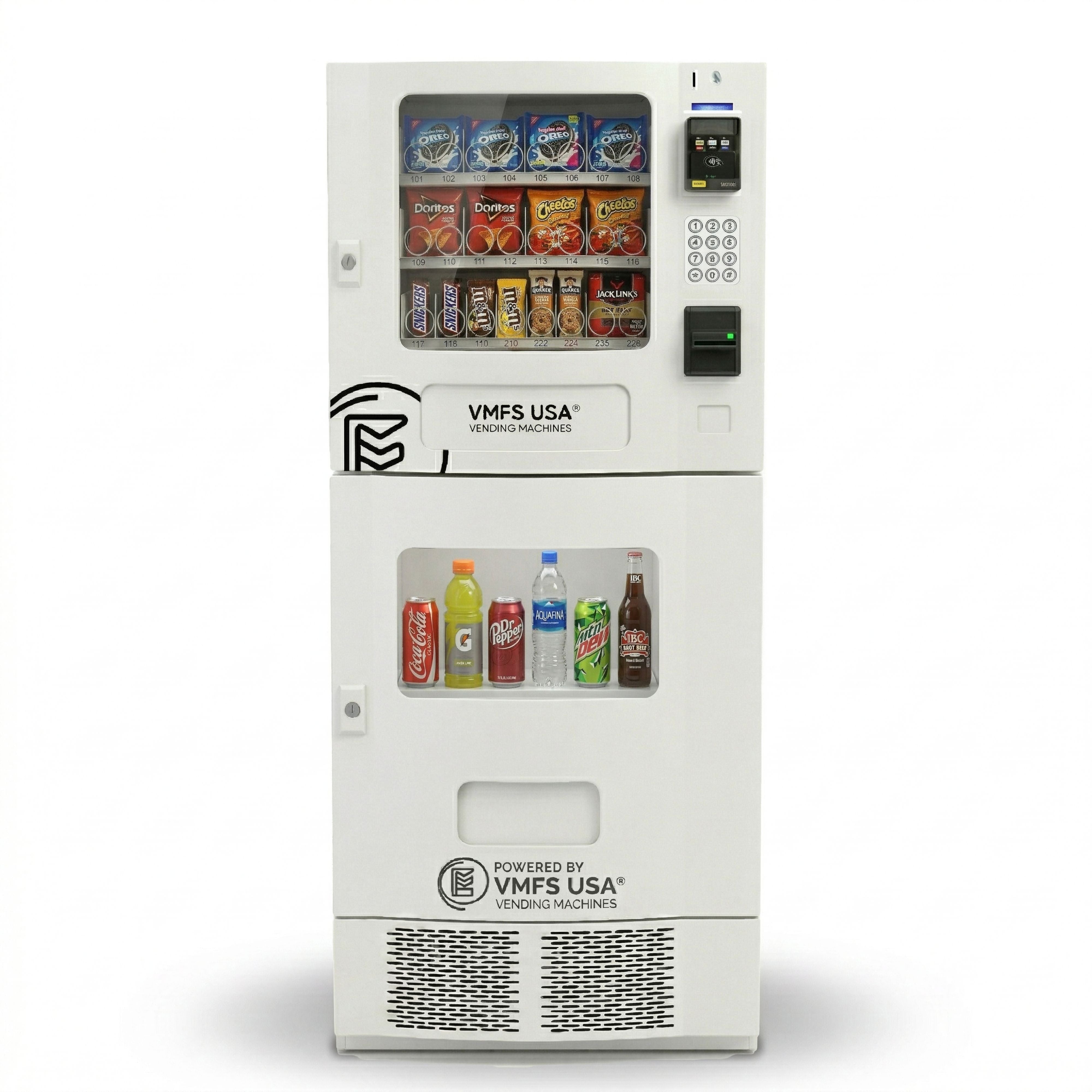
| Upfront cost |
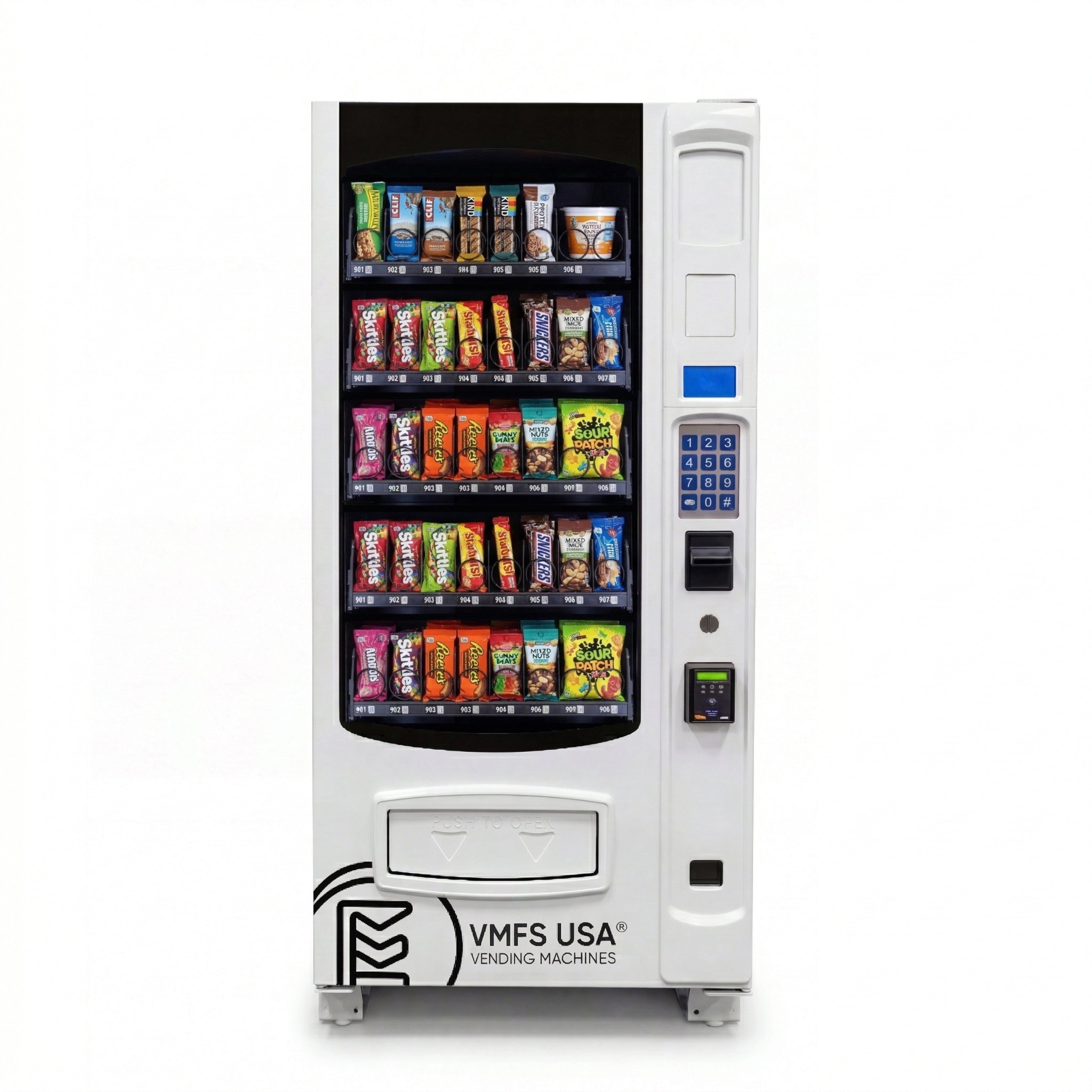
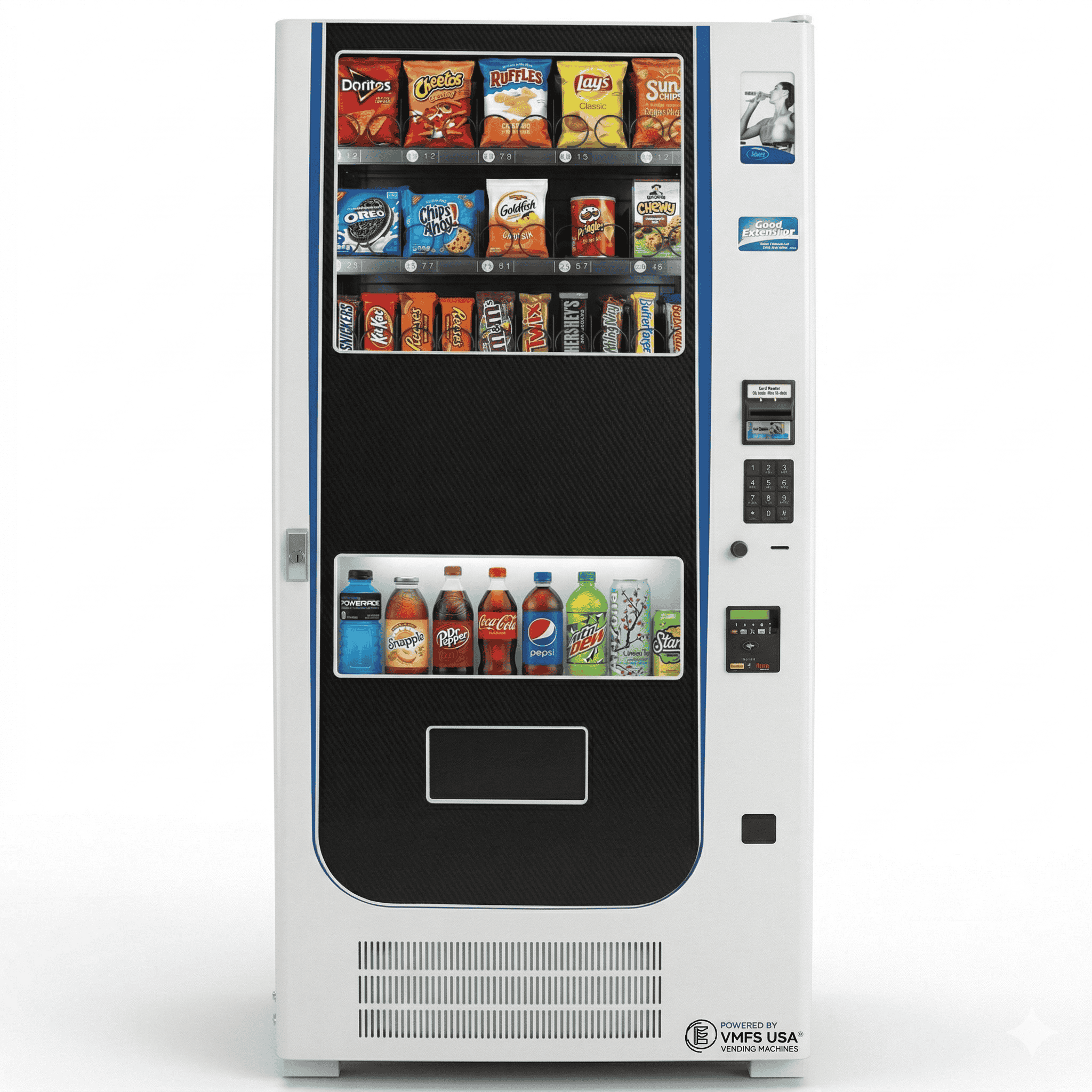
Lower
Simpler mechanism and higher volume production keeps the base price down. |
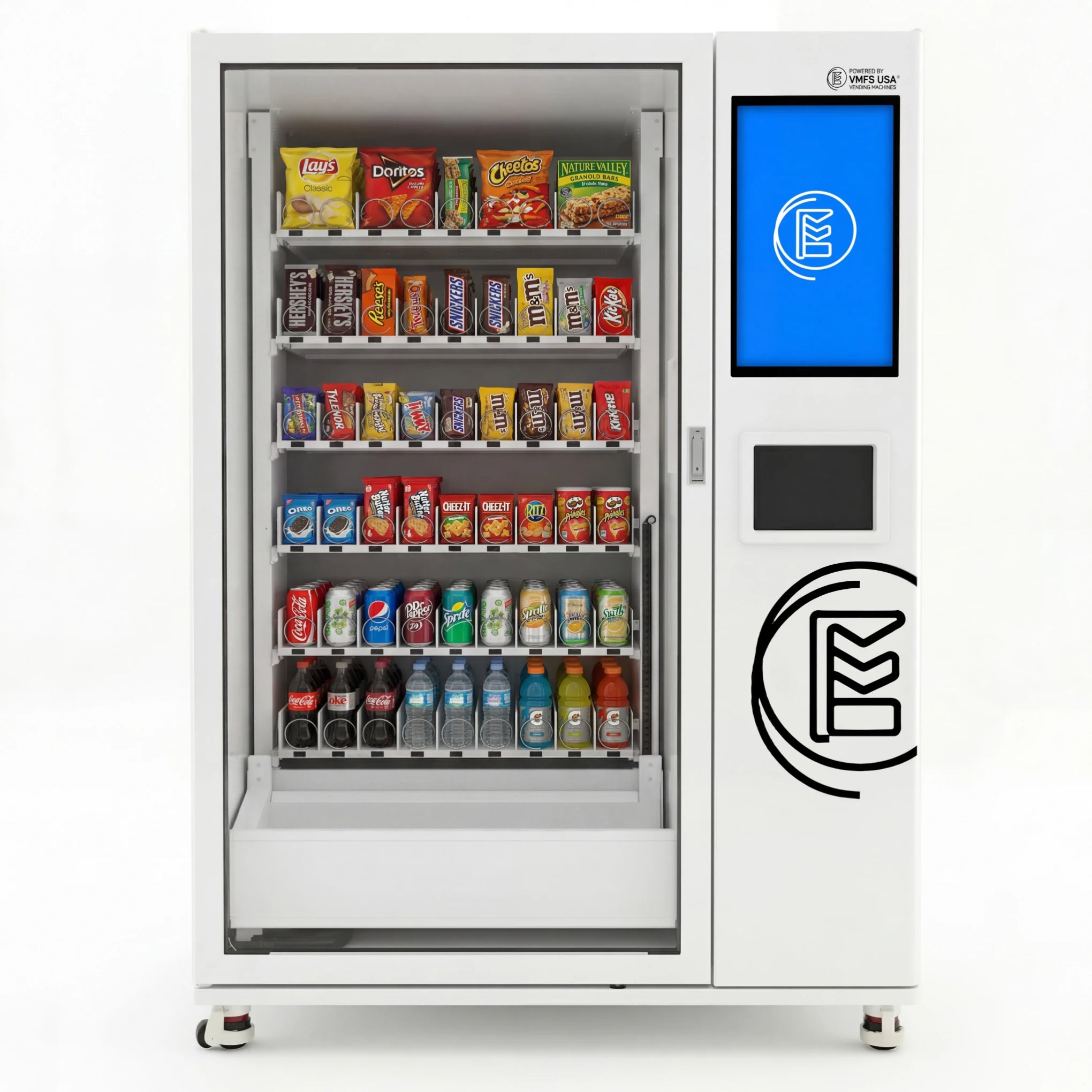
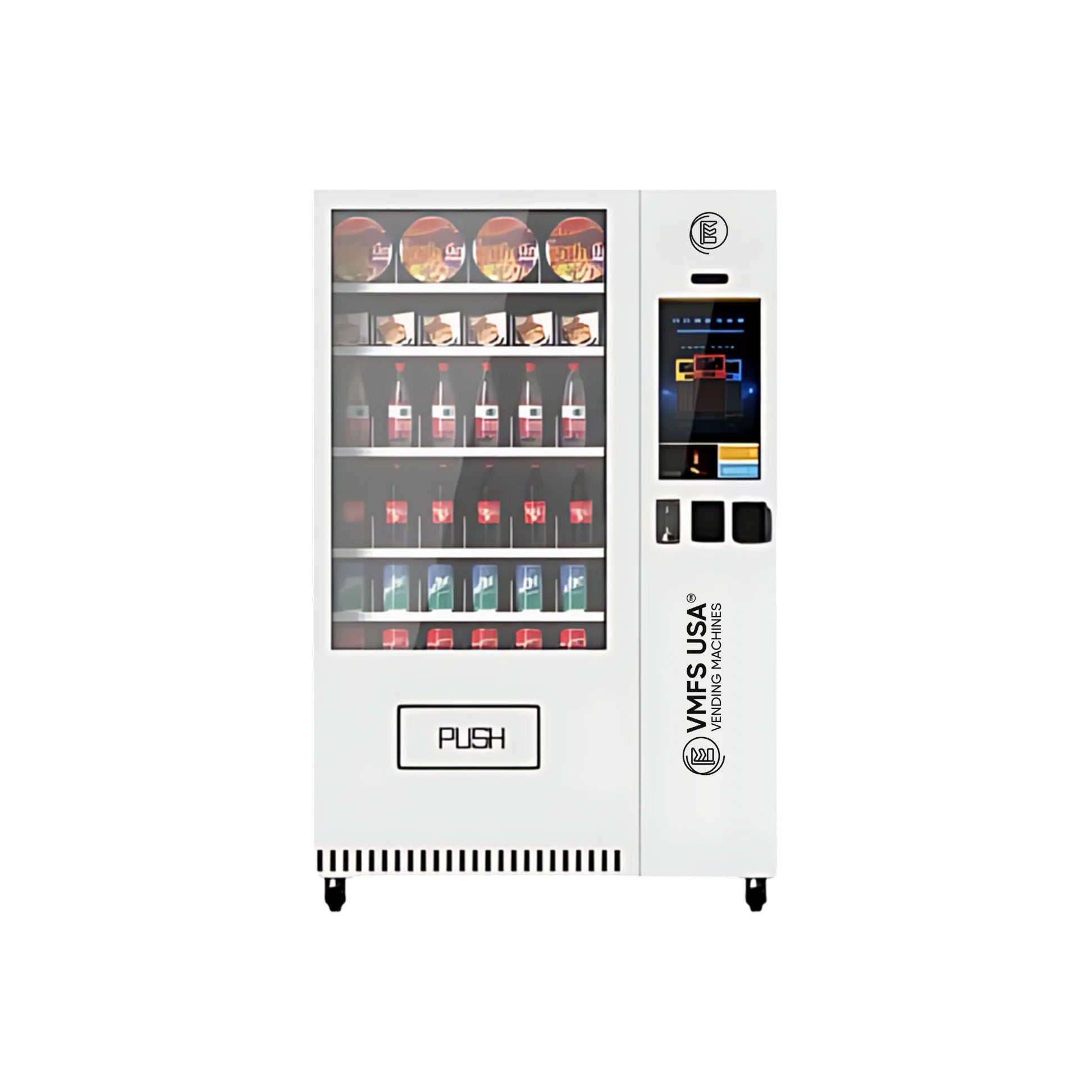
Higher
The lift platform, motors, and sensors add cost, but they pay back through lower damage and higher tickets. |
| Best product price range |
Strongest under $5 per item. Great for shelf stable snacks, candy, chips, and canned drinks. |
Strongest from $3 to $25 per item. Great for premium snacks, bottled drinks, fresh items, and specialty retail. |
| Fragile items (glass, premium packaging) |
Not recommended. Gravity drops can crack glass and dent packaging. |
Excellent. The lift platform lowers products gently to the pickup bin so fragile items arrive intact. |
| Heavy items (large bottles, boxed snacks) |
Limited. Heavy bottles can shake up, and oversized packaging struggles through a standard drop. |
Excellent. The elevator handles weight without strain and dispenses heavy items reliably. |
| Fresh and refrigerated drinks |
Good with proper shelving. Works for most standard cans and small bottles. |
Excellent. Zero drop delivery keeps carbonated drinks settled and bottles undamaged. |
| Standard snacks and canned drinks |
Strongest fit. Simple, fast, and very cost efficient for basic impulse items under $5. |
Works, but usually overkill for this category alone. Better when mixed with higher ticket items. |
| Damage and refund rate |
Moderate for drinks, low for snacks. Some drop related damage is normal on beverages. |
Very low across the board. Delivery sensors confirm every dispense. |
| Capacity per footprint |
Higher. More slots per cubic foot because no lift mechanism takes internal space. |
Slightly lower. The lift platform uses some internal volume, but capacity stays competitive. |
| Ideal use cases |
Offices, break rooms, laundromats, schools, factories, budget routes, and any site where cost per slot matters most. |
Gyms, hotels, hospitals, campuses, premium retail, and any site where damage complaints or presentation matter. |