


What You’re Really Comparing in Vending Machine vs Human Staffing Economics
Vending machine vs human staffing is not a debate about people versus machines. It is a unit economics question. You are paying for selling coverage, which means how many hours you can stay open and how consistently you can take payment and deliver a product.
Small retail usually has two ways to sell simple items like drinks, snacks, and grab and go food:
- Human-run point of sale: a counter, kiosk, or small shop that needs a person scheduled to operate it.
- Automated point of sale: a machine that sells without a staffed shift, then gets serviced on a schedule.
The key difference is simple:
- A person costs money every hour the point of sale is open, even during quiet minutes.
- A machine costs money to operate and service, and it can sell all day and night if the site allows it.
This is why unit economics matters. It turns opinions into measurable numbers:
- Cost per hour: what it costs to keep the selling channel available.
- Cost per sale: what it costs to support one transaction, before product cost.
- Cost per year: what it takes to keep that model running across the full year.
If you are building a small retail setup that sells fast-moving items, vending often wins because it converts “standing there time” into “service time.” Instead of paying someone to wait for the next customer, you pay to keep the system running and then focus human attention where it has leverage (product mix, uptime, and location growth).
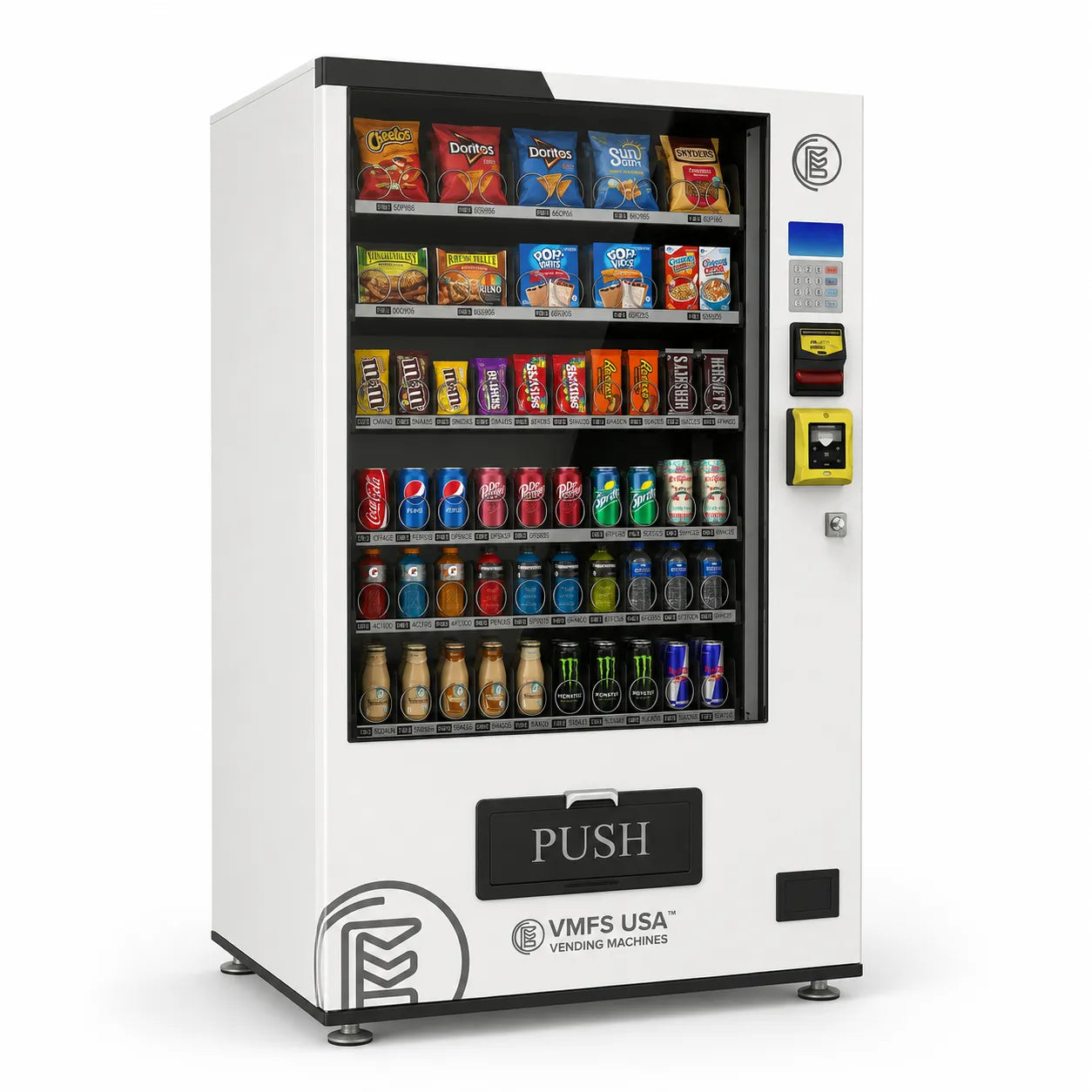
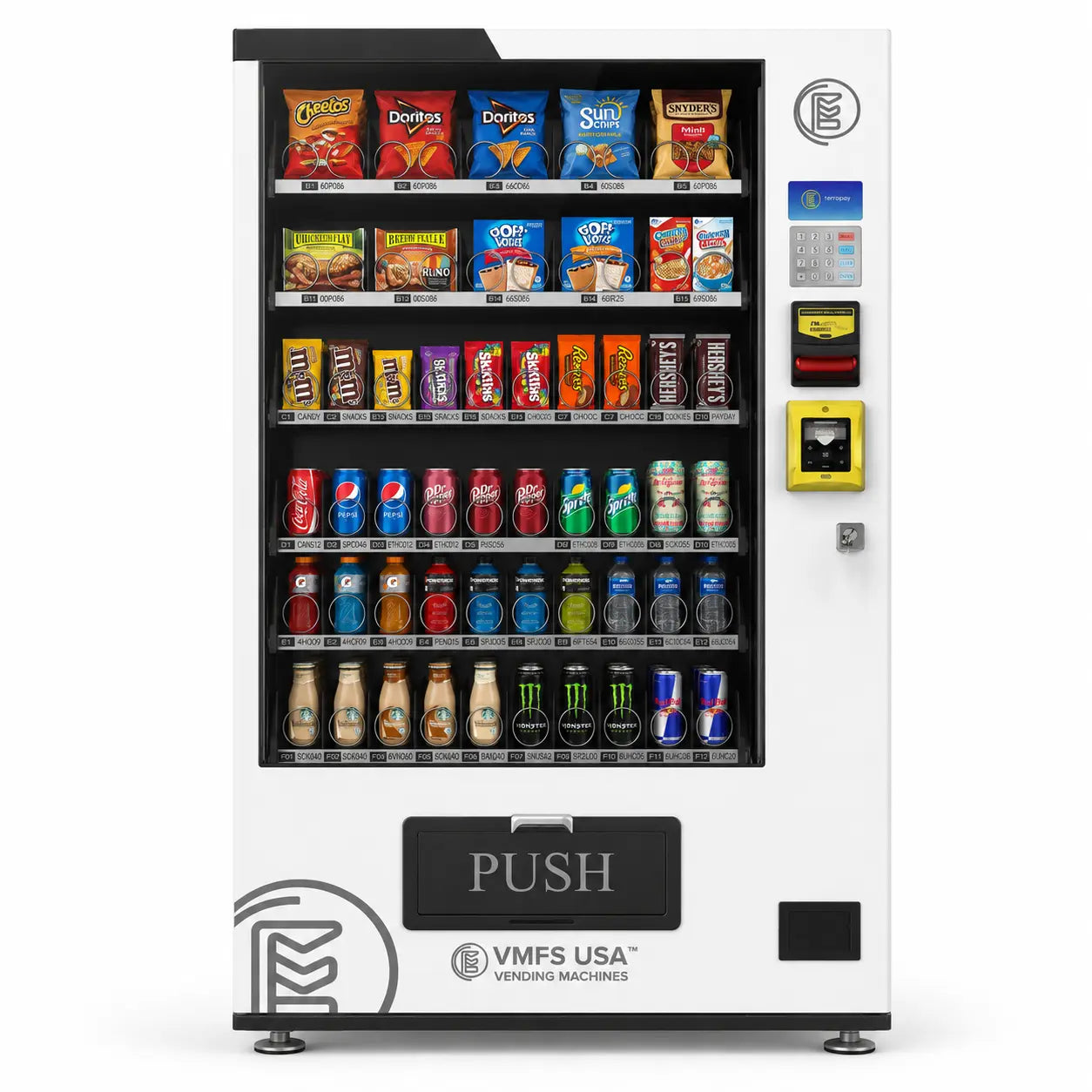
In most setups, you start with a general category like Vending Machines, then pick the format that fits the site. If you want both snacks and drinks in one footprint, Combo Vending Machines are often the simplest match.
How Much Human Staffing Really Costs Per Hour and Per Year in Small Retail
Let’s use your baseline: $15 per hour for staffing. This is a realistic example because the U.S. Bureau of Labor Statistics lists the median pay for cashiers at $14.99 per hour (May 2024).
Now look at what “being open” costs when you rely on scheduled labor.
Wage-only annual cost for a typical 40-hour weekly schedule
- $15/hour × 40 hours/week × 52 weeks = $31,200 per year
This is wage-only. It does not include payroll taxes, coverage gaps, or the time cost of managing staff.
A simple payroll burden example (to avoid underestimating labor)
In the U.S., employers pay Social Security tax at 6.2% and Medicare tax at 1.45% on wages, which is 7.65% combined.
If we apply only that baseline burden:
- $31,200 × 1.0765 = $33,586.80 per year
- $15 × 1.0765 = $16.15 per hour
That is still conservative. Many small retail operators also deal with costs that do not show up as a clean line item on day one:
- coverage gaps (breaks, sick days, late arrivals)
- hiring and training time
- supervision time, cash reconciliation, and paperwork
- process errors, shrink, and cash handling friction
This matters for one reason: staff cost is fixed per hour, but sales are not. When traffic drops, labor cost per sale rises fast. That is the core reason vending machine vs human staffing becomes a unit economics decision.
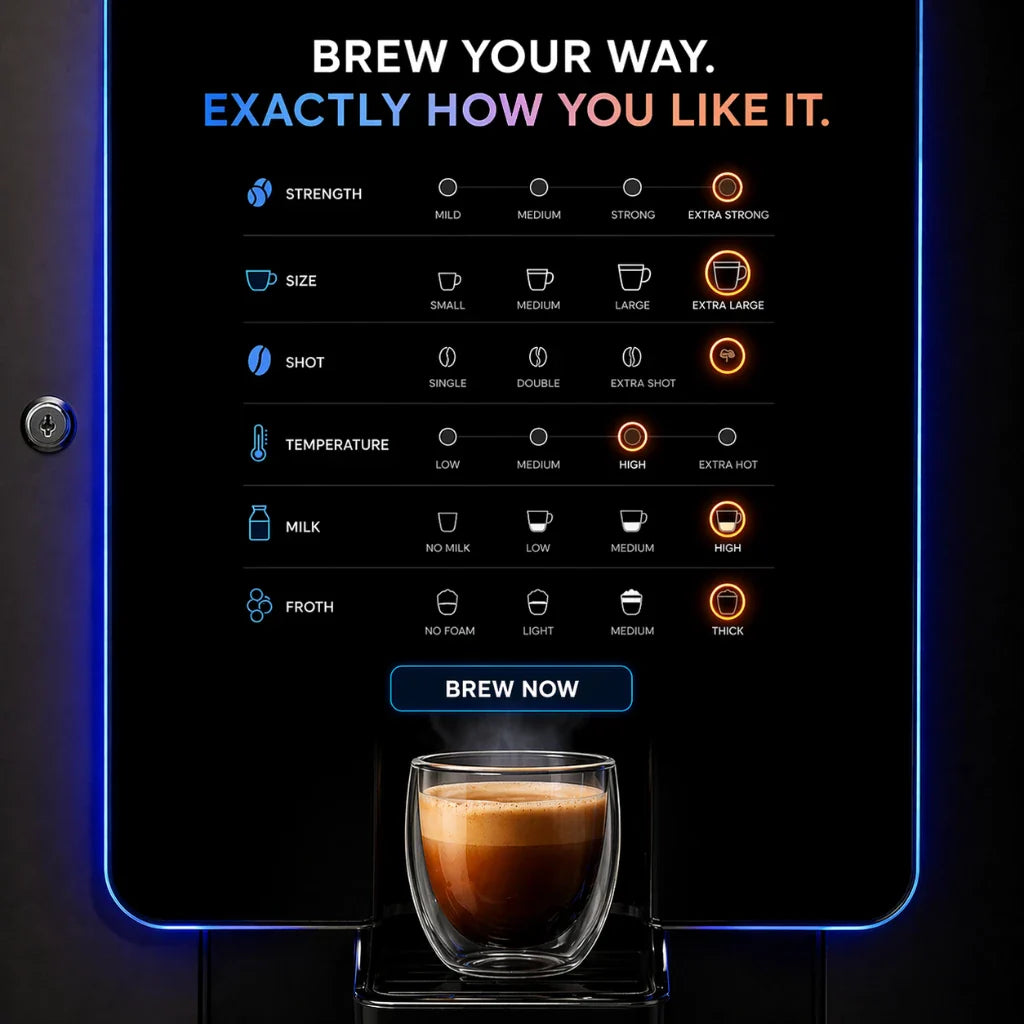
If your goal is to extend selling hours without extending payroll hours, vending categories let you design coverage instead of scheduling it. For cold product, Fridge Vending Machines keep chilled inventory available. For higher-ticket purchases that can improve unit economics, Coffee Vending Machines can lift revenue per transaction and create more margin room per sale.
The Staffing Costs Most Small Retail Shops Miss (And Why They Change Unit Economics)
Even if you start with a clean hourly wage number, staffing costs rarely stay clean in real life. In small retail, the biggest problem is not the posted hourly rate. The problem is that selling coverage depends on people showing up, staying on task, and being consistent across every hour of operation.
Here are the staffing costs that typically push real cost per sale higher than planned:
- Coverage gaps: breaks, sick days, late arrivals, and no-shows create hours where sales are missed or service quality drops.
- Training time: you pay for hours before the employee reaches full speed, and you often repeat this cost when turnover hits.
- Supervision and reconciliation: cash counts, drawer issues, refunds, end of day checks, and basic oversight take time from owners and managers.
- Errors and shrink: mis-rings, misplaced stock, and inconsistent processes increase waste and reduce margin.
These costs matter because they do not scale smoothly. If your shop wants to stay open longer, you do not just add “more sales.” You add more staffing risk, more scheduling work, and more hours where demand is unpredictable. That is why the vending machine vs human staffing comparison becomes a unit economics question instead of a preference question.
This is also where product format becomes part of the labor conversation. A wider product range can increase transactions per hour without adding staffing hours. If the location needs snacks and drinks together, Combo Vending Machines can raise the odds that each visitor finds something worth buying, which supports better cost per sale. If you want to lift average ticket size, categories like Coffee Vending Machines often help because beverage purchases tend to support higher price points per transaction.
What It Really Costs to Run Vending (Power, Maintenance, Payments, and Monitoring)
Vending is not “free.” It has operating costs, and you should list them clearly. The difference is that vending costs are tied to operating the system, not scheduling a person to stand there. When you model this correctly, you get a realistic hourly cost and a realistic cost per sale.
Electricity (especially for refrigerated and chilled products)
Refrigerated vending machines are typically the highest energy users because they run all day to keep product temperature stable. A commonly cited benchmark is 2,500 to 4,400 kWh per year for refrigerated beverage vending machines.
To translate that into dollars, multiply by your local electricity rate. Here is a simple example at $0.12 per kWh:
- 2,500 kWh/year × $0.12 = $300 per year
- 4,400 kWh/year × $0.12 = $528 per year
Maintenance and repairs (the uptime line item)
Maintenance is where many operators win or lose. A machine that is down is not “saving money,” it is missing sales. In unit economics terms, downtime raises your effective cost per sale because fixed operating costs stay while transactions drop. This is why planned checks and faster response times matter, especially for refrigerated setups.
Monitoring tools reduce downtime by showing issues early and helping you service with purpose instead of guessing.
Payments and fees (what happens after you go cashless)
Cashless usually increases conversion and reduces “I do not have cash” friction, but processing fees affect small tickets. Vending pricing models for card acceptance often include a percentage fee plus a fixed per-transaction cost. One recent industry discussion cites a typical range around 2.6% + $0.10, which hits hardest when the average vend is only a few dollars.
This is why payment strategy connects directly to product strategy. If your average vend is low, fixed transaction fees take a bigger bite. If you can lift the average ticket with better mix and better formats, the same payment model hurts less.
Restocking labor (still real, but easier to scale)
Vending still needs human work, but it is different work. Instead of paying for constant coverage, you pay for scheduled service. One route driver can support multiple machines and multiple locations. That is the scaling advantage: labor goes into restocking, cleaning, and fixes, not standing at a counter waiting for demand.
Cost Per Hour Comparison: Human Staffing Cost vs Vending Machine Operating Cost
To compare vending with human staffing, both models must be measured in the same unit. A simple way to do that is cost per hour of selling coverage. Once you have an hourly cost, you can also estimate cost per sale by dividing by transactions per hour.
Human staffing cost per hour (with a basic payroll burden)
Using your $15/hour baseline and the U.S. employer payroll tax example of 7.65% (Social Security and Medicare), the hourly wage cost becomes:
- $15.00 × 1.0765 = $16.15 per hour
This is a baseline for comparison. Real staffing cost often runs higher once you account for coverage gaps, training time, and supervision.
Vending machine operating cost per hour (simple baseline)
For the machine side, use an hourly operating cost based on your real inputs, such as power, maintenance, connectivity, and a realistic allowance for downtime. Your working estimate is $0.25 per hour.
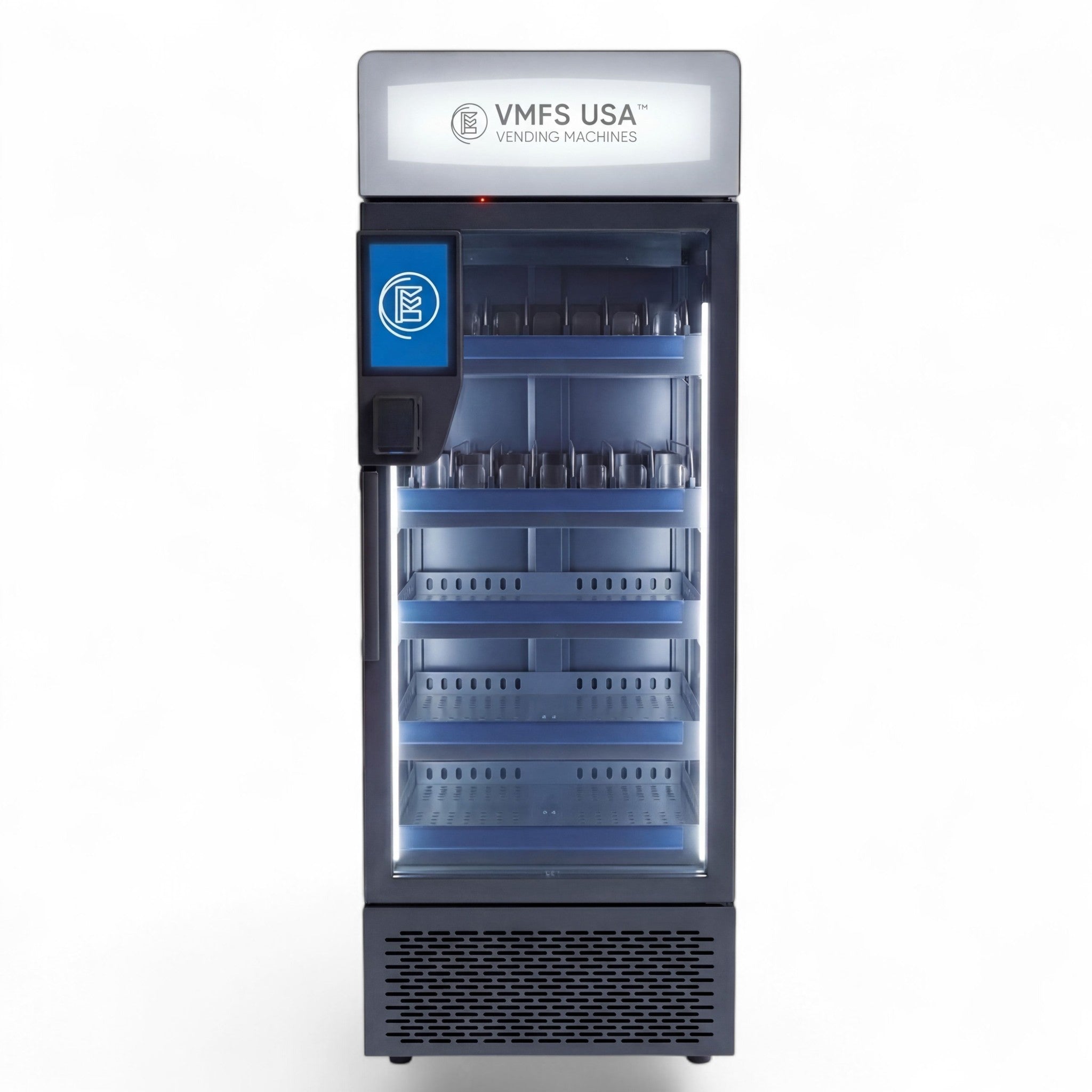
Machine format affects operating cost. Refrigerated setups tend to cost more to run, which matters for Fridge Vending Machines and Food Vending Machines. Monitoring reduces downtime and wasted service trips, so it pairs naturally with Telemetry / Remote Monitoring.
Cost Per Sale Comparison: What Each Transaction Really Costs at Different Traffic Levels
Once you know cost per hour, the next step is cost per sale. This is the clearest unit economics metric because it shows how expensive each transaction becomes when traffic is slow.
Cost per sale = Cost per hour ÷ Sales per hour
The table below uses:
- Human staffing: $16.15 per hour (based on $15/hour plus 7.65% employer payroll tax example)
- Vending machine: $0.25 per hour (your operating estimate)
| Traffic level | Sales per hour | Human cost per sale | Vending cost per sale | Takeaway |
|---|---|---|---|---|
| Slow traffic | 5 | $16.15 ÷ 5 = $3.23 | $0.25 ÷ 5 = $0.05 | Staffed hours become expensive when demand is uneven. |
| Normal traffic | 15 | $16.15 ÷ 15 = $1.08 | $0.25 ÷ 15 = $0.017 | Vending stays low cost per sale across normal traffic. |
| Busy traffic | 30 | $16.15 ÷ 30 = $0.54 | $0.25 ÷ 30 = $0.008 | Busy periods help staffing, but vending remains highly efficient. |
This is the core reason vending saves money in many small retail setups. Human staffing is a fixed hourly cost, so the cost per sale depends heavily on traffic consistency. A vending machine has a much lower hourly operating cost, so the cost per sale stays low even when sales come in waves.
Product format affects sales per hour. If the machine offers the right mix, you often lift transactions per hour without adding staffed hours:
- Combo Vending Machines support both snacks and drinks in one footprint.
- Coffee Vending Machines can raise revenue per transaction when the location supports daily repeat demand.
- Food Vending Machines fit locations that need meal options and can support a tighter service schedule.
How Much Vending Can Save: Simple Scenarios Small Retail Owners Can Understand
Savings is easiest to explain in hours. If vending replaces some staffed coverage, the avoided labor hours convert directly into dollars. The machine still needs service, but service labor scales across many machines and does not require constant presence.
Scenario A: Replace one 8-hour shift each day with vending coverage
If a shop currently staffs an 8-hour window just to stay open, replacing that window with vending coverage avoids:
- 8 hours/day × 365 days = 2,920 labor hours per year
At the $16.15/hour baseline:
- 2,920 × $16.15 = $47,158 per year in staffing cost
If the machine operating estimate is $0.25/hour:
- 2,920 × $0.25 = $730 per year in machine operating cost for those hours
The gap between those two numbers is the economic reason automation shows up in small retail. It turns “stay open” cost into “keep the system running” cost, and the difference can fund better product, better service, and faster growth.
Scenario B: Cut staffed hours in half and use vending for off-peak sales
Many small retailers do not need to replace all staff hours. A common hybrid move is to keep staff for the peak period, then let vending handle off-peak traffic.
If you reduce staffed coverage from 8 hours/day to 4 hours/day:
- 4 hours/day × 365 days = 1,460 labor hours avoided per year
- 1,460 × $16.15 = $23,579 per year baseline staffing cost avoided
Vending can carry that off-peak demand with the same machine footprint. A format like Combo Vending Machines often works in hybrid setups because it keeps the selection broad when staff is not present.
Scenario C: Extend selling hours without adding payroll
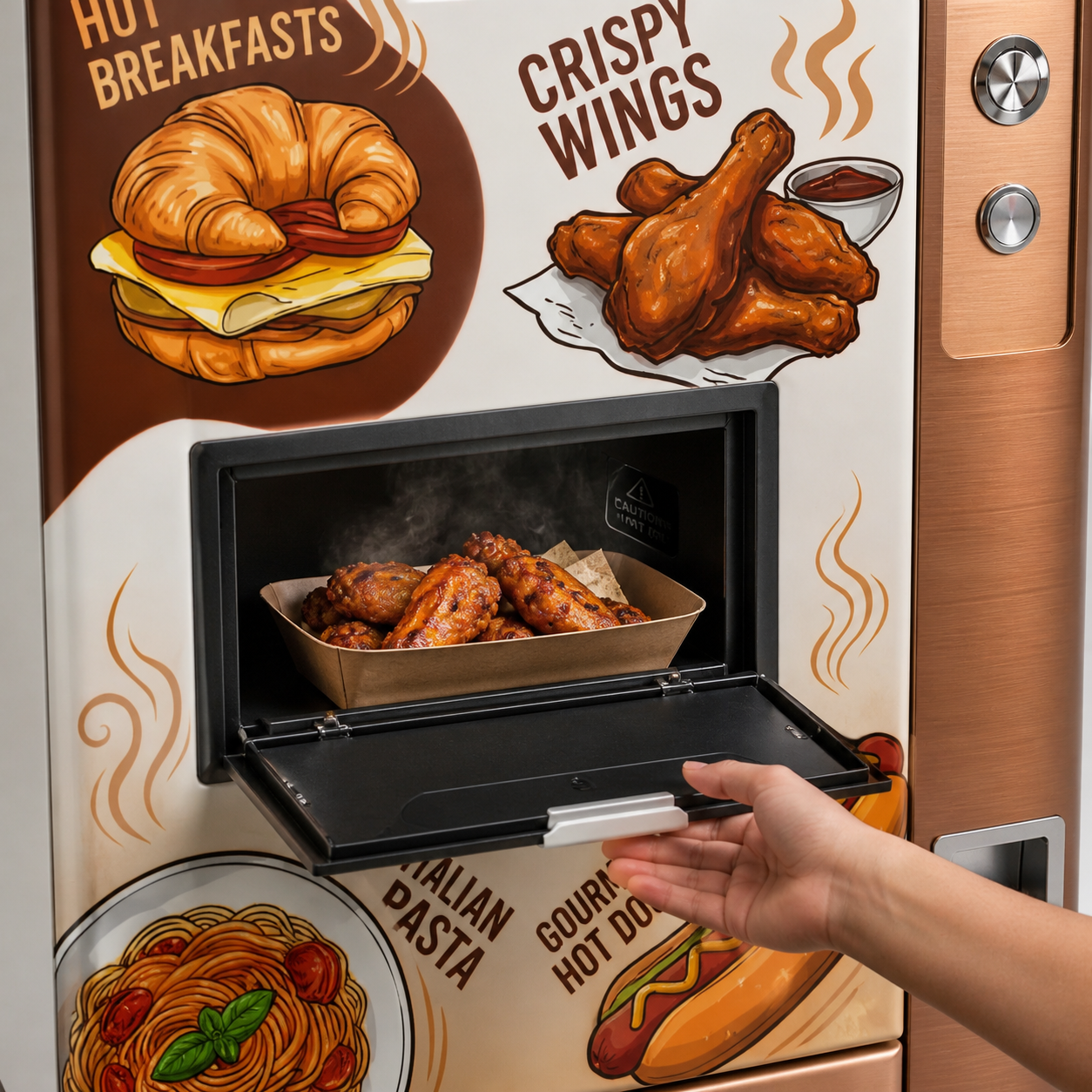
Even if you do not cut any staff hours, vending can create new sales hours. That changes unit economics because it adds revenue without adding a full shift. Refrigerated options such as Fridge Vending Machines and prepared options through Food Vending Machines can capture demand that exists outside staffed hours, especially in workplaces and facilities.
Payments and Average Ticket Size: Why Cashless Can Help or Hurt Without the Right Product Mix
Payments matter because vending purchases are often small. When the average transaction is $1 to $4, a fixed per-transaction fee can take a noticeable share of margin. That does not mean cashless is bad. It means you need to plan for it.
Cashless usually improves conversion because customers do not need exact change. It also reduces cash handling and can speed up service. The unit economics question is whether each sale still leaves enough margin after product cost and fees.
Here are three practical ways operators protect margin while still offering cashless:
- Lift the average ticket: categories like Coffee Vending Machines often support higher price points per transaction, which makes fixed fees smaller as a share of revenue.
- Widen the choice set: Combo Vending Machines can raise conversion by offering snacks and drinks in one stop. More buyers find something they want.
- Price with intent: set price points that leave room for product cost, fees, and waste. Do not copy a nearby store price that assumes staffed checkout economics.
Cashless also connects to operations. When you pair cashless with monitoring, you learn what sells, what gets stuck, and when demand spikes. That is why Telemetry / Remote Monitoring is not just a nice extra. It supports better restocking decisions and faster fixes.
Break-Even and Payback: A Simple Way to Know If Vending Beats Staffing
Break-even is easier than it sounds. You are looking for the point where the machine’s monthly contribution margin covers operating costs and pays back the machine investment.
A clean model looks like this:
- Contribution margin per sale = Selling price − Product cost − Payment fees − Other variable costs
- Monthly contribution margin = Contribution margin per sale × Monthly sales
- Payback period = Machine investment ÷ Monthly contribution margin
Example 1: Combo vending setup (balanced demand)
A Combo Vending Machines setup often works as a first deployment because it covers common demand in small retail and workplace settings.
Assume these simple inputs:
- Average contribution margin after product cost and fees: $0.90 per sale
- Average sales volume: 40 sales per day
Then monthly contribution margin is:
- 40 sales/day × 30 days = 1,200 sales/month
- 1,200 × $0.90 = $1,080/month
If the machine investment is $4,500:
- $4,500 ÷ $1,080 = about 4.2 months payback
The point is the method. If your margin is lower or your volume is lower, payback stretches. If your location is strong and your product mix fits, payback shrinks.
Example 2: Higher ticket vending (coffee, food, chilled items)
Higher ticket formats can change payback because each sale carries more margin room. That is one reason Coffee Vending Machines can work well in locations with repeat daily demand.
Prepared and chilled items can also perform well when the site has demand outside staffed hours. For that, consider Food Vending Machines and Fridge Vending Machines. These formats often require tighter service schedules and stronger uptime control, so pairing them with Telemetry / Remote Monitoring helps protect the unit economics by reducing lost sales from downtime.
Why Automation Is the Future in Small Retail: Machines Sell, People Improve the System
Automation is not about removing people. It is about moving people away from low-leverage tasks and into high-leverage work.
In a staffed model, a lot of labor goes into waiting, scanning, making change, and repeating the same steps. In an automated model, the selling step is handled by the machine. Human time shifts toward work that improves profit and reliability:
- Location growth: finding better sites, negotiating terms, and expanding coverage
- Product mix: choosing SKUs that match the site and improve sales per hour
- Merchandising: planograms, pricing, and seasonal swaps
- Uptime: fixing issues fast, reducing downtime, and preventing repeat failures
- Service quality: cleaning, freshness checks, and consistent standards
This is why Telemetry / Remote Monitoring fits the automation story so well. Monitoring turns a vending route into a managed system. You make fewer wasted trips, you spot problems earlier, and you keep sales flowing.
When you apply this thinking across categories, the model scales. One operator can support multiple Vending Machines and multiple locations. That scaling effect is where the long-term advantage comes from.
Where Humans Still Win: The Jobs Automation Does Not Cover Well
Vending is not the answer for every point of sale. Humans still win in situations that need judgment, flexibility, and real-time service.
- Complex orders: custom preparation, substitutions, special requests
- High-touch service: returns, complaints, relationship selling
- Frequent exceptions: edge cases that require immediate decisions
- Brand experience: when the experience is the product, not just the product
This is why the best strategy for many small retail operators is not “all humans” or “all machines.” It is choosing the right model for the right hours and the right demand pattern.
Where Vending Wins Hard: Off-Peak Demand, Long Hours, and Always-Available Convenience
Vending tends to win when demand is real but inconsistent. Many small retail sites have waves of buyers, not steady lines. In that environment, staffing is expensive because labor cost per hour stays fixed while sales per hour changes.
Vending performs best in these situations:
- Off-peak traffic: late afternoons, evenings, early mornings
- 24/7 environments: workplaces, residential buildings, hospitals, gyms, warehouses
- Quick decisions: snacks, drinks, coffee, and grab and go items
- Limited space: small footprint needs that cannot justify a staffed counter
The Hybrid Setup That Works Best: Keep Humans for Peak Hours, Use Vending for Coverage
For small retail, hybrid is often the best answer. Humans cover the hours and tasks that need judgment. Vending covers the hours where demand exists but does not justify staffing.
Hybrid setups typically look like this:
- Peak staffed, off-peak automated: staff the rush window, keep vending available outside it
- Overflow vending: reduce lines and speed up simple purchases
- Staples in vending, exceptions with staff: machines handle best sellers, staff handles special needs
Final Takeaway: Vending Machine vs Human Staffing Is About Focus and Coverage
Vending machine vs human staffing becomes clear when you compare cost per hour and cost per sale. Staffed retail can work well when traffic is steady and service needs are high. Vending wins when demand is real but uneven, and when the goal is to stay available without paying for constant presence.
The future trend is simple: machines handle repeatable selling, and people focus on what needs attention most. For small retail, that usually means building better coverage, improving uptime, and growing locations with the right product categories.
Share:
How To Use Apple Pay On A Vending Machine?
How To Get A Vending Machine License And Permit In Colorado