




Design the perfect vending solution for your location and customers.

Join the VMFS newsletter and step into a thriving network dedicated to collective success.
One signup. Endless possibilities.
Unattended retail has shifted fast. North America now hosts over 35,000 active micro markets, and the category is growing twice as fast as the older snack and drink machine format. Operators who moved early are reporting two to four times the revenue per location compared to a four-machine bank. The single market in a 200-employee office is doing what a row of older machines used to do, and doing it without the dust on the buttons.
But here's the catch. Most new operators launch a market without a real plan, then watch it lose money on shrinkage, the wrong placement, or a kiosk nobody uses. The format is forgiving in revenue terms and unforgiving in setup terms. Get the first 90 days right and the route compounds. Get the first 90 days wrong and the route stalls before it earns back the equipment cost.
This guide gives you the full operator playbook. You'll learn how modern micro markets actually work in 2026, what they really cost, where they perform best, the equipment choices that match each location type, and how to build a route that earns instead of bleeds. You can explore our micro market alongside this guide to match the format to your first placement as you read.
VMFSUSA is the only US operator partner that pairs the machine, the placement team, the legal arm, and the marketing engine under one roof. While most suppliers ship a kiosk and walk away, our operators get a full launch system. That is why they ramp faster than anyone trying to run this play solo.
A micro market is an unattended, self-service retail space inside a workplace, residential building, or campus. Customers walk in and grab products off open shelves and glass coolers. They check out at a kiosk using a card, phone, or sometimes a payroll deduction. There's no employee on site. No machine spitting out a chip bag. Most importantly, no caps on what the format can sell.
The micro market sits between a traditional self-service machine and a small convenience store. It carries 150 to 400 SKUs, including fresh sandwiches, salads, coffee, energy drinks, and grab and go meals that a coil-based unit could never hold. That product range is the whole reason operators are switching, because every fresh-food category lifts ticket size in a way that snack-only formats cannot match.
Setup is simpler than most operators expect. You install open shelving, one or two refrigerated coolers, a freezer if needed, and a self-checkout kiosk. The kiosk handles payments, prints receipts, tracks inventory in real time, and pushes data to your back office. Modern systems also include cloud-based telemetry, which means you can see every transaction and stock-out remotely instead of driving to each location to check.
Customers shop the way they would in any small store. They pick what they want, scan it at the kiosk, and pay. Cameras and software handle loss prevention. Most micro markets fit inside 100 to 200 square feet, which means even tight breakrooms can accommodate the full format. Larger spaces allow for additional coolers, a freezer for frozen meals, and a wider snack and beverage selection.
Traditional micro markets need a kiosk. The newer wave of AI grab and go coolers skips that step. Customers tap a card to unlock the cooler, take what they want, and close the door. The system charges them automatically using computer vision and weight sensors. No kiosk, no scanning, no checkout queue.
These hybrid setups are starting to win in tight spaces and high-trust environments. Some operators run a traditional micro market in the main breakroom and an AI cooler on each floor for late-night access. The combination lifts revenue per square foot without doubling the labor cost. AI grab and go also tends to outperform on impulse purchases because the friction of scanning is gone, which means customers grab a second item more often.
The shift is driven by three forces. First, customers want fresh food and the older format physically cannot hold it. Second, cashless payment now dominates and modern micro markets handle every payment type natively. Third, the unit economics simply work better. Two operators with similar effort levels can earn three times the revenue if one runs a micro market and the other runs four older machines.
Vending machines are not dying. Over 4.6 million still operate across North America, generating around $24 billion a year. They are still the right answer for a busy gym lobby, a warehouse floor, or any spot with under 50 daily users. However, when you compare a four-machine bank against one full-size micro market in a 200-employee office, the numbers tell a different story.
A four-machine setup (two snack, two drink) runs around $10,000 new. A full-size micro market with shelving, coolers, and a kiosk lands closer to $12,000 to $15,000 based on widely reported industry averages. The difference is small. The earnings gap is not.
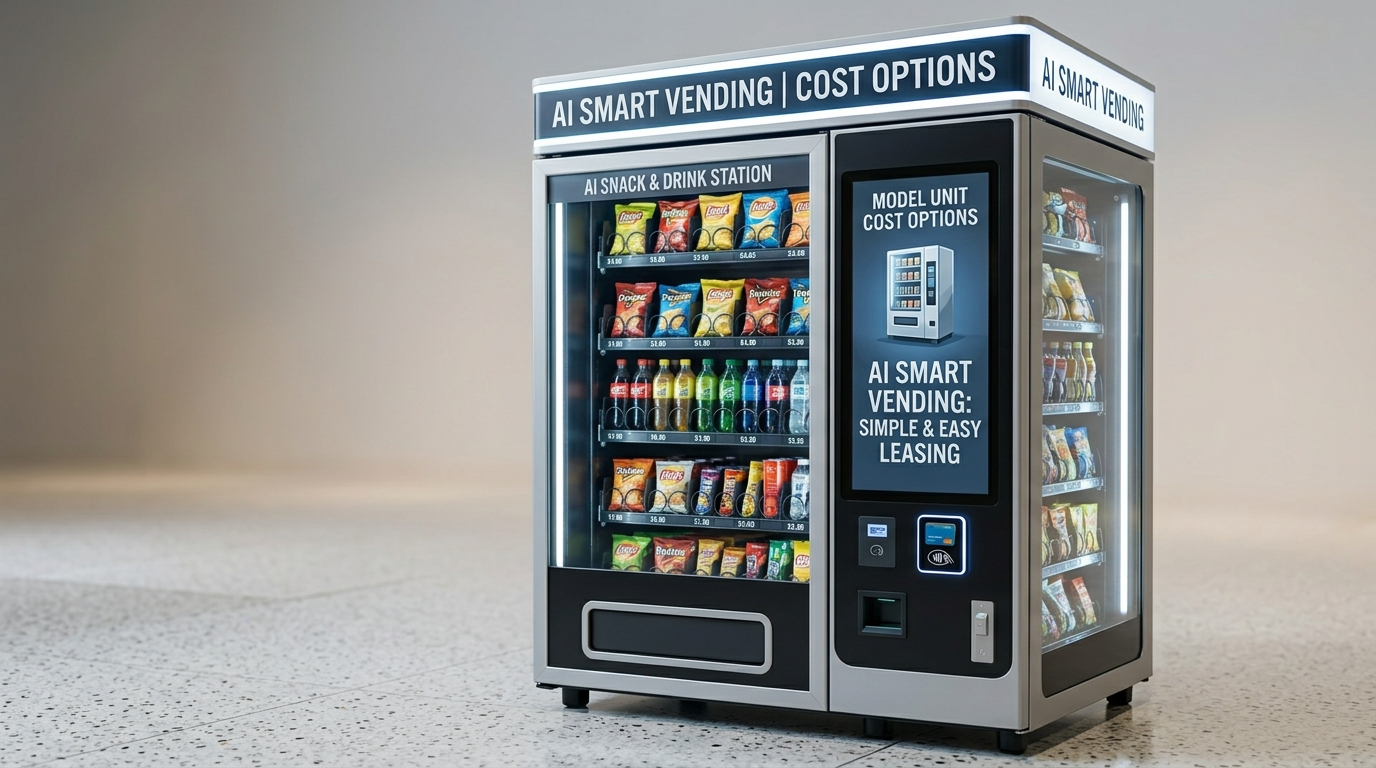
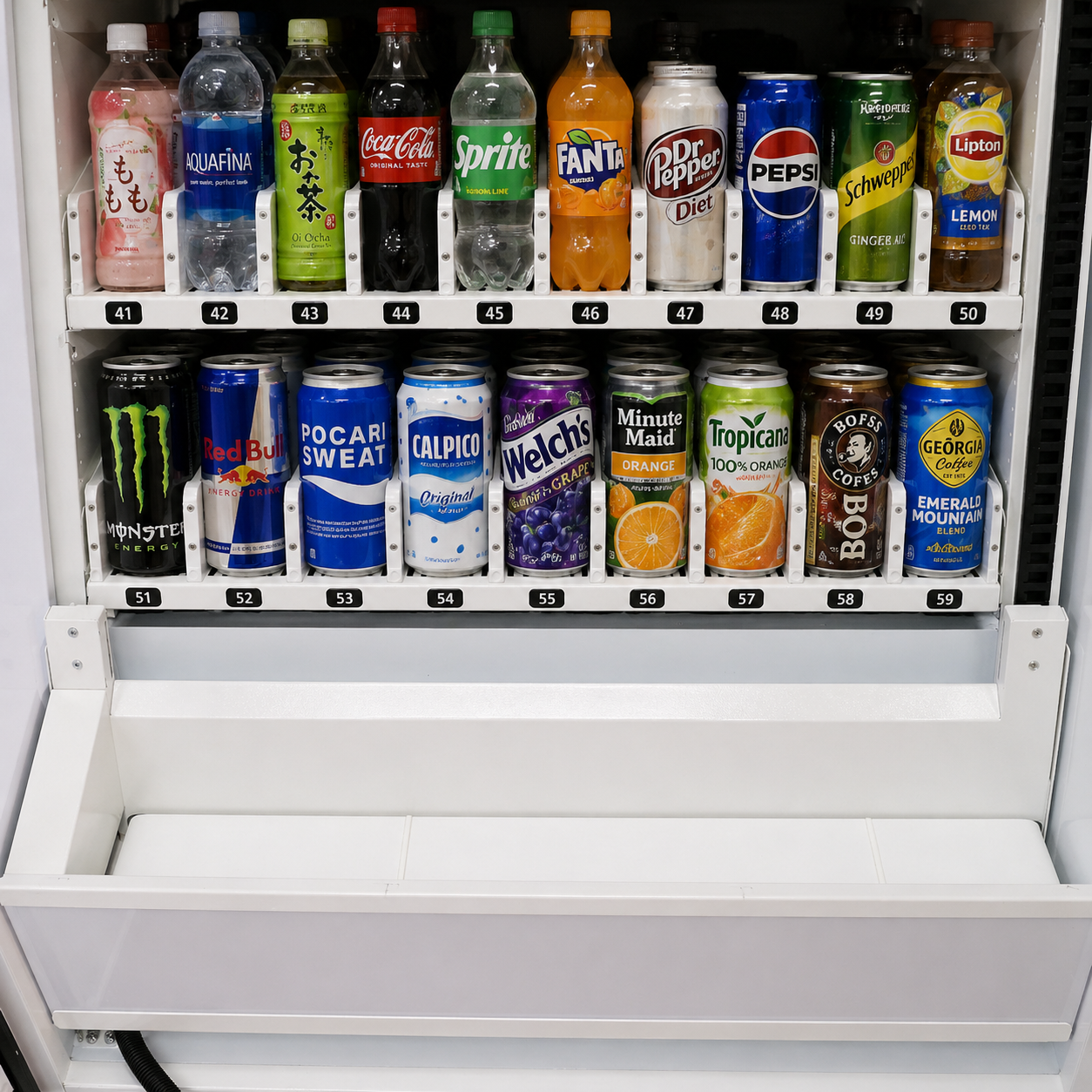
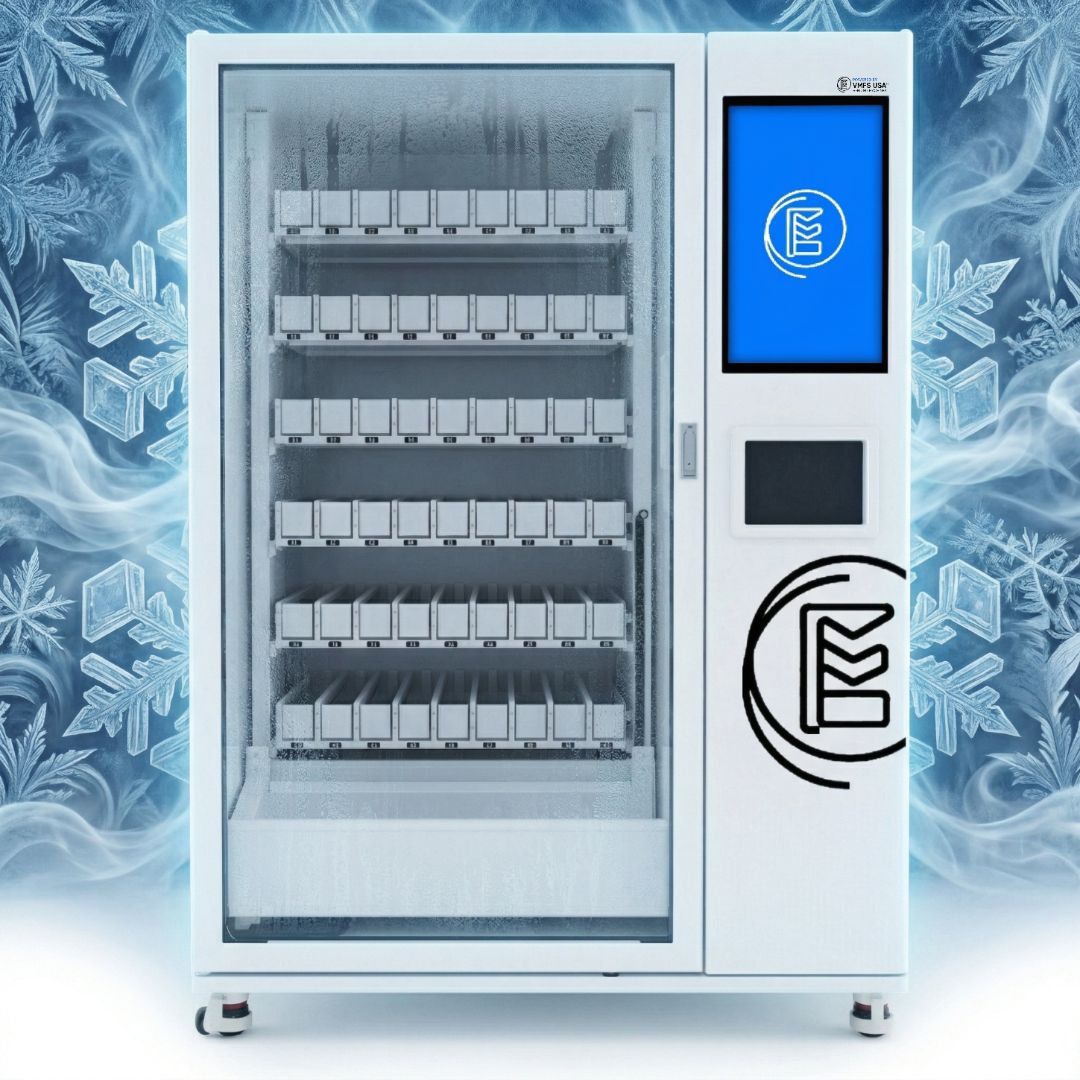
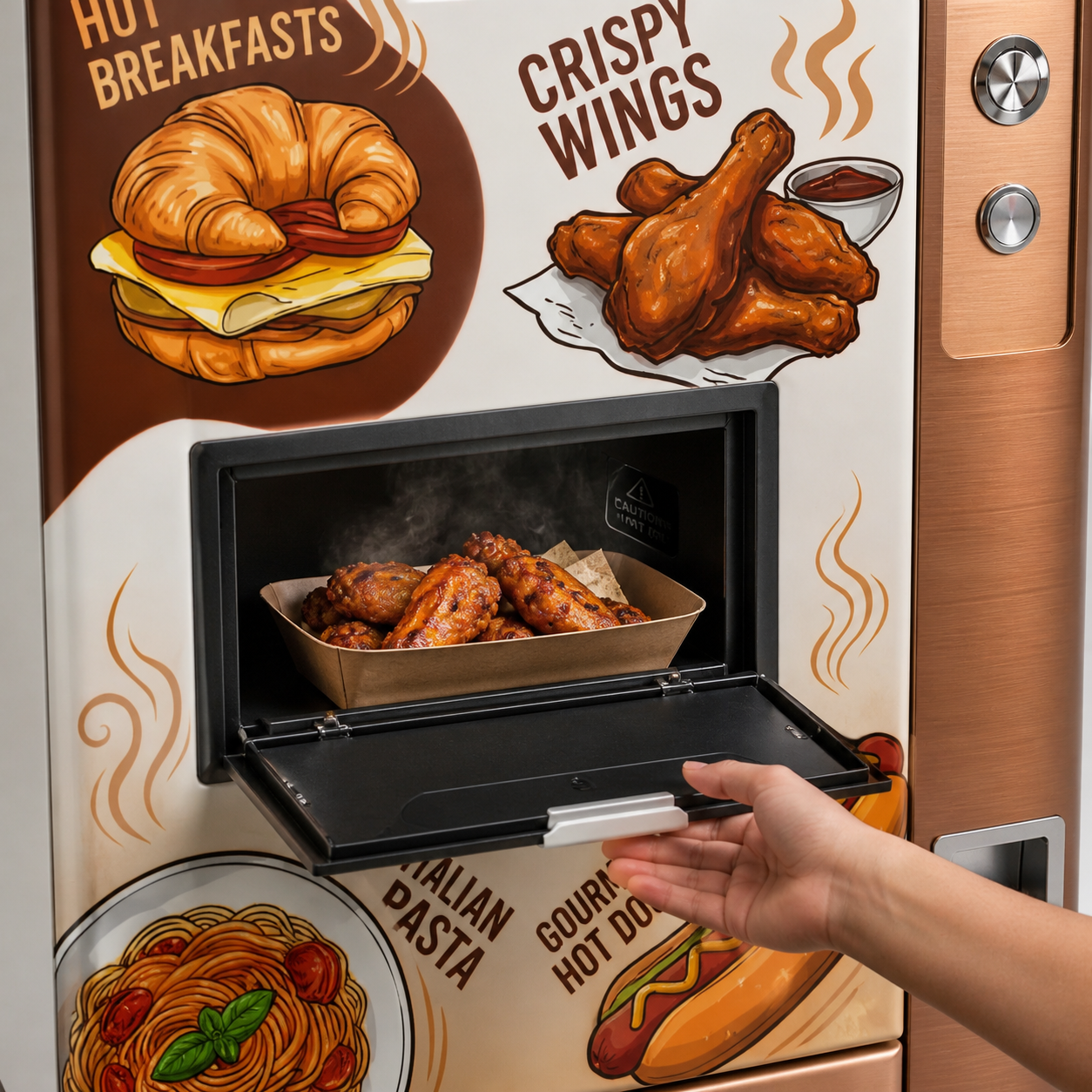
For operators evaluating both formats, the right answer often depends on the specific placement. Our complete vending and micro market catalog covers every snack, drink, combo, fresh food, and AI cooler option, because the right answer depends on the location, not the trend.
Industry data shows the average customer at a snack machine spends around $7 a month. The average micro market customer spends $20. In a 200-person location, that means $1,400 a month from machines versus $4,000 from a market. Annualized, that's about $4,800 from the older format against $19,200 from a market. The machine bank breaks even in roughly 17 months. A micro market breaks even in seven and a half. That gap is why more operators keep pushing toward markets when the placement supports it.
Don't write off the machine format. If your location has under 50 daily users, no secure space, or heavy public access, a traditional unit still delivers better margins per dollar invested. Outdoor placements, public lobbies, and high-vandalism areas all favor the older format. The operator math here is simple. Match the format to the location, not the other way around.
A new micro market setup costs roughly $10,000 to $15,000 for the equipment alone. That figure covers open shelving, one or two coolers, a freezer if needed, and the self-checkout kiosk. Custom millwork, branded signage, and added security cameras can push the total closer to $20,000.
You'll also want to budget for opening inventory ($1,500 to $3,000), payment processing fees, and software subscriptions for the kiosk and backend system. Most operators see real returns inside the first year if the location supports more than 200 daily customers. Locations with fewer customers can still work, but the breakeven stretches.
The biggest cost variable is not the equipment. It is the placement. A bad location at $0 down still costs more than a good one at a 10 percent commission split. Operators who treat placement contracts as routine paperwork lose more money to bad terms than they ever lose on equipment markup. Getting the legal side right at the start is non-negotiable, which is why our operators run their LLC and contract review through Vadviced for legal setup before signing the first deal.
Not every breakroom is a fit. Micro markets need a closed-loop environment, real foot traffic, and a customer base that values fresh food over a $1.50 candy bar. Here is where they actually perform.
This is the sweet spot. White-collar offices with 200 or more on-site employees give you the daily traffic and spending behavior to clear $4,000 a month. Tech companies, finance firms, and law offices over-index because the staff is on site for eight hours and uses the breakroom for lunch. Below 100 employees, the ROI gets thin. The exception is offices with unusual factors like 24-hour operations or a captive audience.
Finding the right office building takes prospecting. Cold email to property managers works, but it is slow. Faster operators outsource the prospecting to Vplaced placement specialists who maintain a continuously refreshed pipeline of pre-qualified buildings actively seeking unattended retail vendors.
Hospitals run all day and night. Night staff, residents, and visitors all need food when the cafeteria closes. A micro market in a hospital wing or medical office building can outperform an office of the same size, because the traffic does not stop at 5 p.m. Plan for fresh salads, protein options, and lower-sugar drinks instead of a candy-heavy mix.
Healthcare placements also tend to require longer contracts and more compliance work. Health department permits, food handler certifications, and ADA verification all need to be in order before the first install. This is where having the legal stack pre-built saves weeks of delay, which is why operators chasing healthcare placements typically pre-file their permits and entity paperwork through Vadviced for legal compliance before the first hospital pitch goes out.
Plants with shift workers are gold. A 300-person distribution center running three shifts gives you 900 daily customers, all with predictable schedules and limited food options nearby. Managers love micro markets here because they keep workers on site instead of driving 15 minutes to the nearest gas station. These locations also tend to favor combo formats: a traditional micro market for full meals plus AI grab and go coolers for between-shift snack runs. Manufacturing facilities decision-makers are usually plant operations managers rather than property managers, which means the prospecting approach differs from office work and benefits from the Vplaced industrial placement playbook built for this exact buyer type.
Hotels are using micro markets to replace tired in-room minibars. Hotel micro market traffic peaks between midnight and 3 a.m., when room service is closed and guests need a snack or a forgotten essential. Apartment buildings and student housing complexes use them to differentiate against the unit next door. Both formats work, but they need a smaller footprint and a curated, premium product mix that includes essentials like phone chargers, toothbrushes, and small electronics alongside food. Securing hotel and luxury residential placements takes a different pitch than office buildings, which is why operators pursuing this vertical often source through Vplaced hospitality placement specialists who maintain direct relationships with hotel chains and luxury property management groups.
Here is where most operators get it wrong. They buy a great machine, drop it in a building, and assume the rest works itself out. Six months later, the kiosk has dust on it. The location wants them out. The LLC paperwork was never finished. The launch promotion that should have built a customer base in week one never happened.
Winning a micro market route in 2026 means owning four moves at once: the right machine, the right placement, the right legal entity, and the right launch marketing. VMFSUSA built the only operator stack in US unattended retail that solves all four moves at once. Other suppliers hand you a kiosk and a phone number. We hand you the full system. That is the pioneer position in this market, and it is why our operators scale where others stall.
Start with the location, not the spec sheet. A 200-employee tech office wants a clean white kiosk, fresh food coolers, and a curated snack mix. A manufacturing plant wants ruggedized coolers and high-volume drink storage. An apartment lobby wants premium aesthetics and a smaller footprint. The format you pick at this stage decides whether the placement breaks even at month seven or month seventeen.
A signed placement contract is worth more than the cheapest machine. Contracts should cover commission splits (typically 10 to 15 percent for office buildings), exclusivity rights, lease length, restocking access, liability for theft, and exit terms. Skipping exclusivity is the single fastest way to lose a placement to a cheaper competitor 90 days after install. Every contract should pass legal review before signing, and operators serious about scaling route this through Vadviced contract review as a standard step in their placement workflow.
A micro market does not earn just because it exists. The first 30 days set the revenue floor for the next two years. You need on-site signage, an employee email rollout, a launch promotion, and ideally a small referral campaign. Operators serious about route growth run their launch through Vmarketed for marketing engine support so the kiosk earns from day one instead of slow-building over six months.
The four moves work together. Skip any leg and the route stalls. Run all four through the VMFSUSA ecosystem and the route compounds, because every piece is sized and timed to support the next one. No one else in US unattended retail offers this under one roof.
Yes, but only if the location supports the model. A single micro market in a 200-plus employee office can clear $19,000 to $25,000 a year in gross profit after stocking costs. Two locations like that put you in serious side-income territory. Five and you are full-time. Ten and you are running a real business.
The profitability lever is not the machine. It is the placement and the product mix. Operators running 12 or more markets typically renegotiate snack and beverage costs through wholesale buying, push margin from 35 percent up to 45 percent, and add cashless reader upgrades that lift average ticket size. Plan for slower growth in year one. Plan for compounding in years two and three.
Smaller operators sometimes enter with one micro market and three traditional machines side by side. The hybrid setup works because the older units carry the cash flow during ramp, while the market builds its base. By month nine, the market typically out-earns all three machines combined, at which point the operator either replaces the machines with another market or relocates them to a different placement.
Every new operator asks about theft. Modern micro markets see 2 to 4 percent shrinkage in the first 90 days, dropping to 1 to 2 percent once the customer base normalizes. Cameras, smart cooler locks, and visible security signage all reduce shrinkage. Closed-loop locations like office buildings and gated apartment lobbies see lower shrinkage than public-facing placements.
The smarter play is to build shrinkage into the pricing instead of chasing zero loss. A 2 percent shrinkage rate on $4,000 monthly revenue is $80, which is well within the margin operators carry on the product mix. Treating shrinkage as a fixed cost rather than a problem to solve usually saves operators more money than aggressive enforcement does.
Micro markets are the highest-margin format in unattended retail right now. The numbers favor operators who can hit a 200-plus employee placement, the equipment cost is recoverable inside a year, and the customer demand is genuine, not hype. The market is also still early enough that operators who move now can build route density before the late-2020s consolidation wave arrives.
But the operators who scale are not doing it alone. They stack the right machine with the right placement, the right legal entity, and the right marketing. VMFSUSA is the only US partner that delivers all four under one roof. That is why our operators win faster than anyone running solo.


Share:
How to Start a Hot Food Vending Machine Business in 2026: Costs, Margins, and Real Operator Data
Hot Food From a Vending Machine: What We Saw at Venditalia 2026